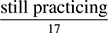
America herıtage1. still practicing2had began3iron, a most intractable material4. UC lugging5embark on6 Lee had spent the summer carting 4-H groups out from Michigan to the east coast for various county fairs and expositions8.
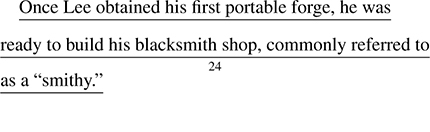
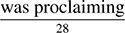
Once Lee obtained his first portable forge, he was ready to build his blacksmith shop, commonly referred to as a "smithy."9but stood for10long pointed11later at, a family event Lee,12was proclaiming13watches15
A Modern Blacksmith
You will probably never find his name in a history book, but to this day, Walker Lee continues to contribute to Walker Lee is an old-fashioned, modern- day blacksmith, the fine art of manipulating metal over a hot fire. In his words, "Blacksmithing is no dying art!"
Walker Lee his career in hand-forged ironwork at the age of 30. The idea of creating an object out of appealed to him. He started on this new venture by collecting and reading every book he could find that described the process of blacksmithing, including its history, its practical and decorative uses, and the equipment needed to establish and outfit his own smithy. During the course of his research, Lee discovered a tool necessary for the success of any blacksmith: the anvil, a heavy block of iron or steel upon which the blacksmith hammered and shaped the malleable metal.
Lee bought his first anvil from 84-year-old Hurley Alford Templeton of Philadelphia, it home to Michigan in the back of a 4-H county bus. This anvil weighed 100 pounds, about the minimum size Walker Lee needed to this new career path.
Lee's first anvil cost him $100, and four months later, he paid $75 for an additional implement-a vice-from Cornell University in New York. This important tool also made way back to Michigan in the back of Lee's 4-H bus.
In the interest of economy, he constructed this shop out of inexpensive oak planks and tarpaper. It was a crude little shack only nine years. Lee, who by then was completely hooked on blacksmithing, replaced his first shop with a finer one made of more expensive wood; this shop also had glass windows, a definite improvement over Lee's original "smithy."
[1] The very first object Lee forged in his shop was a Hudson Bay dagger. [2] Many people refer to this type of knife as a "dag." [3] As he recalls making the knife he says, "From the minute I first saw the thing take shape, I was hooked ⦠still am. There's an element of magic in it to me. You heat it up and pound it with a hammer and it goes where you want it to go." [4] Years discovered that his Italian ancestors were accomplished blacksmiths. [5] During the gathering, Lee's great uncle Johnny that Lee's propensity for blacksmithing was "in the blood," and he happily presented Lee with a new 125-pound anvil. 29
As an outside observer Walker Lee bending and shaping a hot metal rod into some recognizable form, it is difficult to discern the origin of the magic Lee spoke of; is it in the glowing, orange steel or in Walker himself?
 Walker Lee is an old-fashioned, modern- day blacksmith,
  the fine art of manipulating metal over a hot fire. In his words, "Blacksmithing is no dying art!"
 his career in hand-forged ironwork at the age of 30. The idea of creating an object out of
  appealed to him. He started on this new venture by collecting and reading every book he could find that described the process of blacksmithing, including its history, its practical and decorative uses, and the equipment needed to establish and outfit his own smithy. During the course of his research, Lee discovered a tool necessary for the success of any blacksmith: the anvil, a heavy block of iron or steel upon which the blacksmith hammered and shaped the malleable metal.
 it home to Michigan in the back of a 4-H county bus. This anvil weighed 100 pounds, about the minimum size Walker Lee needed to
  this new career path.
 way back to Michigan in the back of Lee's 4-H bus.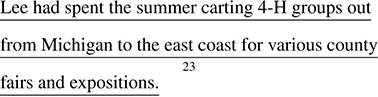
 In the interest of economy, he constructed this shop out of inexpensive oak planks and tarpaper. It was a crude little shack
  only nine years. Lee, who by then was completely hooked on blacksmithing, replaced his first shop with a finer one made of more expensive wood; this shop also had glass windows, a definite improvement over Lee's original "smithy."
 Hudson Bay dagger. [2] Many people refer to this type of knife as a "dag." [3] As he recalls making the knife he says, "From the minute I first saw the thing take shape, I was hooked ⦠still am. There's an element of magic in it to me. You heat it up and pound it with a hammer and it goes where you want it to go." [4] Years
  discovered that his Italian ancestors were accomplished blacksmiths. [5] During the gathering, Lee's great uncle Johnny
  that Lee's propensity for blacksmithing was "in the blood," and he happily presented Lee with a new 125-pound anvil.
  Walker Lee bending and shaping a hot metal rod into some recognizable form, it is difficult to discern the origin of the magic Lee spoke of; is it in the glowing, orange steel or in Walker himself?