Unfulfilled Promises
If you have ever entered a contest of any  are well aware of the legal requirements, exclusions, and disclaimers that
  the contest's entry form. Many laws today regulate a contest sponsor's responsibilities to the entrants, and courts are filled with lawsuits
  noncompliance on both sides. However, this was not always the case.
In 1896, a contest motivated a Norwegian immigrant, Helga Estby, to travel nearly  from the state of Washington to New York City. Unfortunately, as is still sometimes true, Helga won the competition only to find that the
  $10,000 award was mysteriously absent.
[1] Helga  on her farm with her husband and nine children in Spokane, Washington, when she read of a $10,000 prize being offered to a woman who was willing to walk across the country. [2] Because the Estby farm was facing foreclosure, Helga decided that walking across the country in a bicycle skirt for that kind of money was a small price to pay for a
  . [3] At the time, this style of skirt was considered inappropriate because it revealed the female ankle. [4] The only requirement, from all accounts, was that she wear a modern, newfangled bicycle skirt as she traveled. 53
So, in May of 1896, Helga and her 18-year-old daughter, Clara,  on their long journey.

 Presumably, Helga and Clara found food and shelter along the way, and they arrived in New York City in December, seven months after their departure. The contest sponsors, however,
 .
.
This story of bravery and persistence 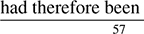
 for nearly a century, primarily because Helga's seven-month absence from the farm wreaked havoc on her family. Two of her children died of diphtheria while she was gone. To make matters worse, her husband had sequestered the surviving children in an unheated shed, thinking that this was the only way to keep them from being infected with the disease. Since the contest sponsor failed to award Helga the money, the Estbys ended up losing the farm; her expedition had been a disaster.
At the time, Helga's trip was considered an embarrassment by the Norwegian-American community and was kept utterly quiet. After Helga's death, her own children burned the hundreds of pages Helga had written  a small scrapbook of newspaper clippings and very few details of Helga's life or her ill-fated trip. Looking back 100 years, one can only marvel at the boldness and bravery that must have energized Helga Estby to make that journey on foot across the country
 .60
.60