English · Drill 56
English practice 56
⏱ 00:00
Score
—
I appreciate your detailed instructions, but I need to point out a critical issue with the input provided.
The PASSAGE section you've given me appears to be severely fragmented or corrupted. It contains isolated fragments like "and can," "recent," "Most volcanoes were being formed as," "one of them is," etc., with standalone numbers (61, 63, 99, 19, 89, 72, 75) scattered throughout, but these fragments do not form coherent sentences or paragraphs.
Without a properly reconstructed passage that makes grammatical and semantic sense, I cannot accurately:
1. Determine which text should be underlined for each question
2. Match fragment lengths to the answer options provided
3. Preserve the original passage content while inserting markup
**To proceed, I need:**
- A complete, readable PASSAGE (even if OCR'd, it should form coherent text)
- Confirmation that the standalone numbers (61, 63, 99, 19, 89, 72, 75) actually correspond to question numbers in your QUESTIONS list (you've provided Q1–Q15, which doesn't align)
Could you provide the passage again, or clarify the source? If you have the original ACT passage image or a cleaner OCR output, that would help me deliver accurate HTML.
 analyze the vibrations of the earth to warn of
  eruptions.
 the result of magma flowing out of the surface of the earth and hardening, usually near a subduction zone. As two tectonic plates collide,
 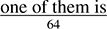 forced under the other, and the seabed rock melts to form new, low-density magma.
  and eventually penetrates unstable pockets of the Earth's surface. Some magma will succeed in reaching the surface either to form a new volcano or
  more mass to an existing one. Not all volcanoes are formed at continental boundaries, however.
 by a different mechanism. One theory, proposed in the 1960s, seeks to explain volcanoes such as those that formed the Hawaiian Islands, which are not at a plate boundary. The probable explanation is a hotspot, which is a fixed point beneath the Earth's crust where a narrow plume of magma rises into the crust and appears at the surface as a continental volcano or a volcanic island.
  provide evidence that the hotspot stays in place as the tectonic plate passes over it.
 research must include the study of ancient human accounts of eruptions and layers of rock millions of years old.
 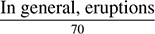 seem to occur every several hundred or even thousand years, and many volcanoes seem to be completely dormant,
  No one can say for sure that these volcanoes will not erupt again in the future, so scientists
  the study of every volcano situated where a future eruption could bring significant human loss and environmental damage. Predicting volcanic eruptions is not an exact science, and only within the briefest geological moment can people
  to evacuate. Through studying the Earth's vibrations, physical deformation, and gas emissions, geologists in recent decades have made several excellent predictions of volcanic eruption,
 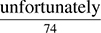 at the Philippines' Mount Pinatubo in 1991 and Popocatépetl outside Mexico City in 2000.
 they show that humans have much more to learn about the planet Earth.