English · Drill 58
English practice 58
⏱ 00:00
Score
—
I appreciate you providing this material, but I notice the PASSAGE text appears to be fragmented or corrupted—it contains incomplete phrases and isolated words without clear narrative structure:
- "one acquires / All / for example / confused / owner, when / can also indicate / Body language and even vocalizations are good / indicators of a dog's emotions. / signals; training / is / WI / ith / best with remembering"
This doesn't form coherent sentences, and the question numbers (16, 18, 10, 21, 30, 20, etc.) don't appear in sequential order or match the Q1–Q15 range in the QUESTIONS section.
**To produce accurate HTML output, I need:**
1. The **complete, readable PASSAGE** as it should appear (either fixing the OCR errors or providing the original text)
2. Confirmation that the QUESTIONS are **Q1 through Q15** (currently labeled with mixed formats: F/G/H/J and A/B/C/D)
3. Clarity on which question numbers correspond to which questions
Could you please provide the passage again, or confirm whether this is a partial excerpt that needs correction?
 a new dog. This is particularly important if the dog owner is a social person or plans to interact with other dogs and
  owners. One problem, however, is that obedience training is a form of one-way communication from the owner to the dog.
  owners fail to consider that the animal actually communicates back.
 , may wrinkle when the dog is
  or waiting for a signal from its
  the dog wants to play, it might pull its lips back slightly, showing its teeth in a "smile." A relaxed dog might let its tongue loll out of its mouth, creating a look of contentment on its face.
 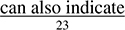 which emotion a dog is experiencing. For example, if the dog's ears are raised, it is probably absorbing the sounds around it. Shifting its ears back flat against its head demonstrates submission or fear.

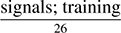 a dog becomes much easier when the owner tries to discern his dog's unique communication signals. [2] As an owner begins tuning in to his dog's body language, he may find that the dog responds to movements in addition to verbal commands. [3] For example, when teaching a dog to "come," the owner might find it more effective to crouch down, the owner's back to the dog as its name is called. [4] The dog will interpret this behavior in a more positive light than if the owner leans forward and yells at it to "come." [5] To a dog, a crouching position is more welcoming than a forward-lean, which a dog naturally finds threatening. [6] Dog owners should always have small treats on hand.
  that there is a great deal more involved in communicating
  a canine than just teaching it to come, stay, heel, and fetch. To attain a strong, two-way relationship, it is
  the importance of nonverbal communication.