Workspace Science Test 127
← Back to Science
Science · Drill 127

Science practice 127

5 questions ~9 min recommended
00:00
Score
I appreciate your input, but I need to clarify the task. The passage you've provided appears to be scientific data presented as: 1. Two graphs showing temperature relationships with various Fauna 2. A table listing Fauna with fossilized stages 3. A classification chart of minerals/materials by stage This is **not a standard ACT English passage** with prose text and underlined portions to mark. The ACT English section typically consists of written passages with specific words or phrases underlined and numbered for editing questions. The questions you've provided (Q1–Q5) reference specific answer choices, but without: - Clear underlined text portions in the passage itself - Explicit digit markers (like "1", "2", "3") showing where questions apply - A prose narrative structure **I cannot accurately apply the HTML rendering rules** because there is no traditional passage text with marked underlines to convert. **To proceed, please provide:** 1. The actual written/prose passage with OCR'd standalone digits marking question locations, OR 2. Clarification that this is a data interpretation section (which would be rendered differently than standard English passages) If you have an ACT English passage with underlined phrases and question numbers, please share that, and I'll render it as specified.
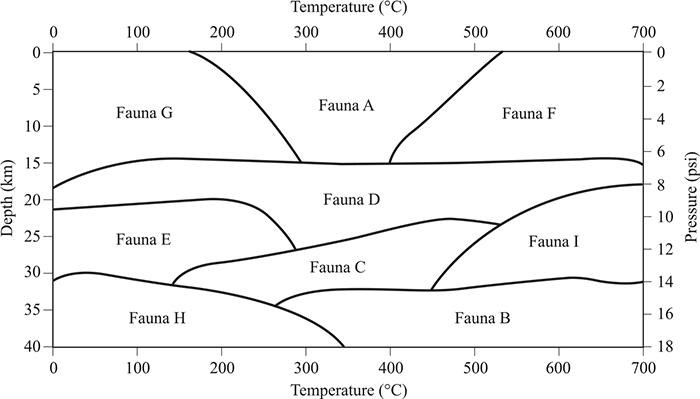
Sedimentary layers form when changes in the environment cause changes in the top soil of the area. As pressure is applied from the additional layers, fossils are formed. Figure 1 shows the different depths and pressure conditions under which different Fauna (categories of fossils) are formed.

Figure 1

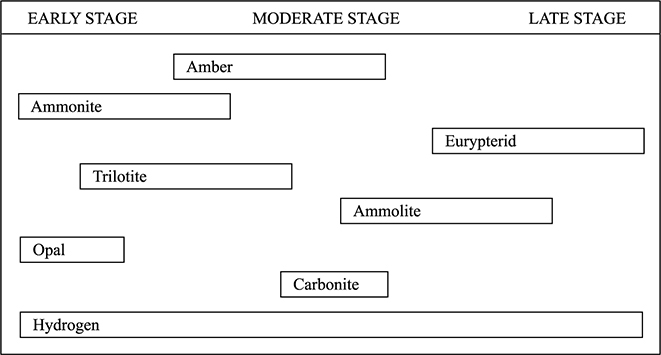
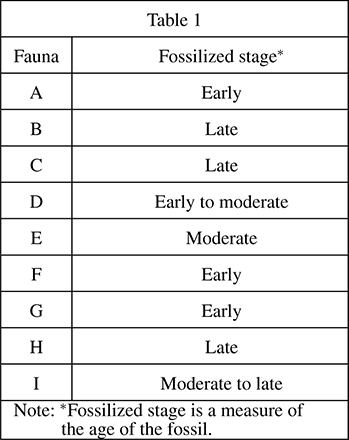
A fossil's formation stage (a measure of the age of the fossil) is classified on a scale of early (first recovered) to late (deeply buried). Table 1 lists the grades of Fauna A-I from Figure 1. Figure 2 shows characteristic compounds that may be found in fossils of a given stage.

Figure 2

1. According to Figure 2, which of the following compounds would most typically be found only in rocks at the moderate stage?

2. According to Figure 1, a Fauna H rock would most likely form under which of the following pressure and temperature conditions?

Pressure     Temerature

3. Figure 1 indicates that as depth increases, pressure:

4. According to Figure 2, the presence of which of the following compounds in a fossil is the least helpful when determining the fossil's stage?

5. Cast fossils are formed when material is placed into a depression in a rock near the surface. They are formed at very high temperatures and low pressures. According to Figure 1, cast fossils are most likely formed in which of the following faunas?